Heavy Lifting News™
Case Studies on Innovative Problem Solving

Synchronous Lift Enables 5-Day Bridge Repair
11/26/2024

By Greg Bogdanski
Sales & Support
Engineered Rigging
When the Florida Department of Transportation (FDOT) tasked Orlando R&B with replacing four bridge bearings under a busy freeway overpass in Fort Myers, FL., safety and speed were its top priorities. To help ensure safety, FDOT mandated the use of synchronous lift technology. Additionally, in an effort to minimize disruptions on this busy transportation thoroughfare, FDOT imposed a strict 5-day time limit to complete the work. Orlando R&B turned to Engineered Rigging to meet both requirements.
The overpass sat atop four girders and spanned approximately 330 feet over Interstate I-75. In total, the cast in-place structure weighed 2,150 tons, but each side of the overpass would be lifted separately with the heaviest weighing 1,450 tons and the lightest 700 tons.
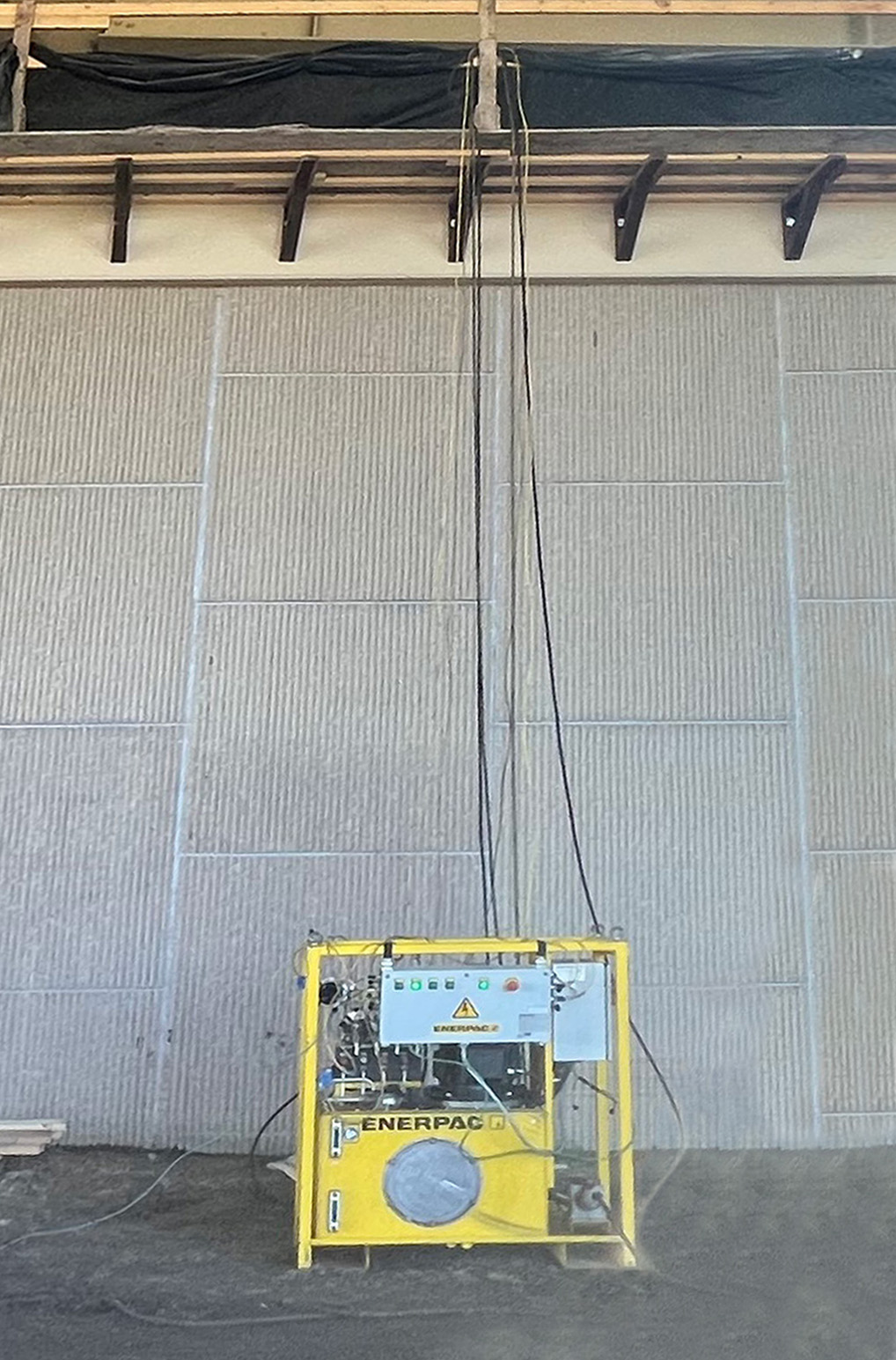
Engineered Rigging worked with the contractor to size the appropriate Bridge Bearing Replacement Kit. Rental components included three Enerpac SPF421SJ Split-Flow Pumps, 20 200-ton LPL 2002 pancake Hydraulic Cylinders (17 used in the lift and three spare), two 400-ton LPL 4002 pancake cylinders, a master network control panel (CLNC12) to synchronously operate the pumps and cylinders, and numerous sensors, cables and hoses. An onsite technician was requested to oversee the lift.
The Risk Is Real
Originally, Orlando R&B thought it would need 21 of the 200-ton cylinders and four of the 400-ton units. Once Engineered Rigging had the actual weight of the bridge girders, we were able to size the system and reduce the overall number of cylinders. This reduction made the system easier to operate and reduced equipment rental costs. Spacing between the girders was tight. Also, each side of the bridge had a different weight, which meant that the loads placed on each cylinder would be unequal. Fortunately, the pancake cylinders’ small footprint – 6 in. tall and less than 10-in. diameter – meant that 17 of them could be connected together and still fit under the bridge.
The FDOT mandate for the use of synchronous lifting also meant operating the three pumps and multiple cylinders and keeping them within the required 2-mm tolerance between leading and lagging cylinder would be easier. Without a synchronous lift system, maintaining an equal lift with cylinders of different sizes would have been very difficult. Prior to electronic synchronization, coordination of a lift between each pump operator was verbal. If communication was lacking, a cylinder position could be out of tolerance, causing you to lose the load. In these situations, the bridge could be damaged, or worse workers injured. By linking the cylinders and split flow pumps to the Master Network Control Panel, a single operator maintained the lifting delta of all cylinders to within the 2-mm tolerance. Should an issue arise, the system would sound alarms and automatically halt the lift.
Offsite Setup and Training
Engineered Rigging shipped the equipment from its Russellville, Ark, Equipment Depot about a week before the 5-day shutdown. Shipping took 2 days. This timing gave Orlando R&B’s personnel time to familiarize themselves with the equipment. It took the contractor team about 3 days to set up system, as this was their first time using synchronous lift.
“Orlando R&B’s team set all the cylinders, pumps and hoses into position prior to operation,” explained Taylor Brown, the onsite Engineered Rigging technician. “The system lifted the east side (Bent 3) of the overpass first; then the team switched all of the pumps to the other side to lift the west side (Bent 1) of the overpass.
The east side of the overpass weighed 702 tons and used eight 200-ton cylinders for the lift. The west side was 1,447 tons and used nine 200-ton jacks and two 400-ton jacks. The lift was 1.25 inches.
“Lifting to that height was quick – maybe 30 minutes,” reported Brown. “It only took that long because the lift had minimal tolerance from one lifting point to the next. Keeping everything equal in weight and in height took a little longer. But as far as getting to the overall weight, that was almost instant.”
Essential Onsite Assistance
Brown was onsite to oversee the lift and to provide training. His presence proved crucial, as during one of the lifts, due to close proximity of the cylinders, one was trying to take too much of the load.
“I noticed the issue immediately and was able to manually correct it,” Brown said.
There was around 10 hours of hold time between lifting and lowering for each side of the overpass from removal of the old bearing to installation of the new. Locking collar LPL-style cylinders allowed the lift to be mechanically held while work at the bearings took place. Orlando R&B finished the lifts and bearing repairs by the morning of the fourth day, and quickly moved everything offsite in time for the highway’s reopening.
In addition to Synchronous Lift Systems, Engineered Rigging has numerous solutions to accelerate bridge construction, maintenance and repairs. For details, read about the McClugage Bridge project in Illinois, the incremental bridge launch of Kentucky’s tallest bridge, the removal of concrete falsework in the construction of Texas’ Panther Island Bridges, and the dismantling of a 90-year old bridge.
Bridges provide vital linkages in our nation’s transportation infrastructure. They enable efficient movement of freight, facilitate equitable access to services and guide commuters to and from work. The Federal Highway Administration’s 2025 budget includes $5.5 billion in funds for states for bridge replacement, rehabilitation, preservation, protection and construction (Bridge formula program). When these repairs must be made, it’s vital that they be performed as quickly and safely as possible. Synchronous lift systems are a critical tool in making that happen.